

A loyalty program is a customer retention system offering points, stamps, discounts, cashback, coupons, or exclusive perks to incentivize repeat purchases. Businesses use these programs not just to reward customers, but to foster enduring, long-term relationships.
Whether implemented through traditional punch cards or modern mobile apps, all loyalty systems share one core principle: rewarding the customer’s ongoing relationship with tangible value. The ultimate goal is turning one-time buyers into loyal, lifelong advocates.
However, no single model fits every business. While a coffee shop thrives on a straightforward digital stamp card , a retailer with varying price points might benefit far more from a points and cashback system.
What is a loyalty program?
A loyalty program is a structured system where customers earn rewards and perks in exchange for their purchases or brand interactions. Its core purpose is to give customers a compelling reason to choose your business again and again.
Rewards can include free items, discounts, points, cashback, coupons, or personalized perks. The secret to success lies in making the program effortless to understand and the value instantly recognizable.
How do loyalty programs work?
While specific mechanics vary, the underlying loop is universal: a customer joins the program, completes a desired action, earns progress or rewards, and redeems those perks down the line.
For instance, a café customer might earn a stamp with every coffee purchased, unlocking a free drink on their tenth visit. In contrast, a boutique might reward points based on total spend, allowing customers to redeem them for discounts on future orders.
1. Customer joins
The customer signs up for the loyalty program and immediately begins unlocking perks.
2. Makes a purchase
Each purchase, visit, or qualifying action moves the customer closer to their next reward.
3. Earns rewards
The customer earns stamps, points, cashback, coupons, or special perks.
4. Returns again
Unlocked rewards give customers a compelling incentive to come back.
What are the benefits of a loyalty program?
The primary goal of any loyalty program is driving customer retention. Attracting a new customer is great, but long-term profitability comes from bringing them back repeatedly and deepening brand loyalty.
That is why a well-designed program is far more than a discount vehicle—it provides customers with a clear, engaging milestone for their next visit. To dive deeper, check out our guide on what a loyalty program does .
Drives repeat visits
Gives customers a tangible reason to return for their next purchase.
Rewards loyal customers
Gives regulars meaningful value in return for their ongoing support.
Boosts retention and engagement
Turns transactional one-off sales into enduring, high-value customer relationships.
What are the main types of loyalty programs?
Loyalty programs are never one-size-fits-all. The right model depends entirely on your product catalog, purchase frequency, and overall reward strategy.
While some brands thrive on a single format, others combine multiple loyalty mechanics into a cohesive omnichannel customer experience.
1. Digital stamp card programs
Stamp cards are the most intuitive loyalty model for high-frequency businesses. Customers earn a stamp for every eligible transaction and claim a reward once they hit the target.
A straightforward structure like "Buy 9 coffees, get the 10th free" makes progress crystal clear. Switching from physical punch cards to a mobile loyalty card allows customers to track their progress seamlessly on their smartphones.
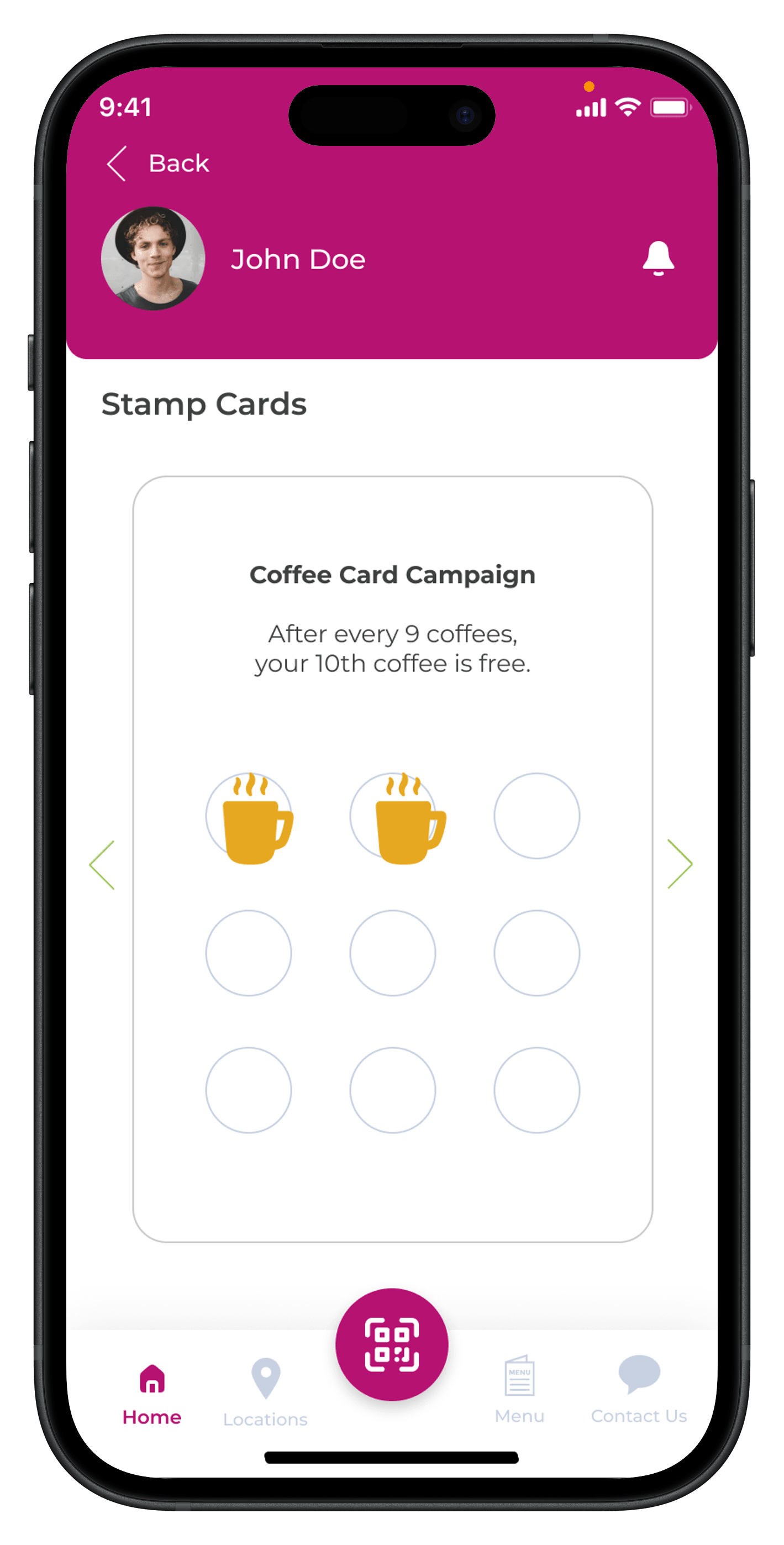
Digital stamp card reward example
Coffee shops, bakeries, restaurants, and salons can award digital stamps for every qualifying visit. Customers track their progress on their mobile device and unlock their reward upon hitting the milestone.
The beauty of this model lies in its simplicity. Without complicated math or point conversions, customers always know exactly how close they are to their next reward.
Explore digital stamp cards2. Points and cashback programs
In points-based loyalty programs, customers earn points proportional to what they spend. These accumulated points can then be redeemed for discounts, products, or exclusive perks.
Similarly, cashback models return a percentage of spend as credit toward future purchases. This is especially effective for businesses with variable order values looking to incentivize higher average basket sizes.
3. Digital coupon programs
Coupons provide an immediate, tangible benefit. Businesses can distribute discounts, complimentary items, or time-sensitive offers directly to their audience.
Managed digitally, coupon campaigns serve as powerful components within a broader loyalty strategy.
4. Referral programs
Your most loyal customers do more than return—they recommend you to friends and family. Referral programs reward existing customers for introducing new buyers to your brand.
With Letstamp, customers can effortlessly generate and share unique referral links using the refer-a-friend feature.
5. Birthday and anniversary rewards
Loyalty is not just about spend; it is about emotional connection. Celebrating personal milestones, like birthdays, creates memorable brand moments.
Automated birthday campaigns delight customers with personalized gifts and give them a timely reason to re-engage with your business.
6. Gamified loyalty programs
Gamification injects excitement, fun, and anticipation into traditional rewards. Instead of simply buying, customers actively engage with playful interactive mechanics.
Through Letstamp’s gamification suite, brands can launch interactive experiences like digital scratch cards, spin-the-wheel games, and mystery reward boxes.
Which loyalty program is right for your business?
The best model aligns with your operational dynamics. It should mirror your customers' natural buying habits, remain simple to understand, and stay profitable for your bottom line.
| Program Type | How It Works | Best Suited For |
|---|---|---|
| Stamp Cards | Customers unlock rewards after completing a set number of visits or purchases. | Businesses with frequent, uniform purchases (e.g., cafés, salons, car washes) |
| Points / Cashback | Customers earn reward points or credit based on total amount spent. | Businesses with varying basket sizes and broad product ranges (e.g., retail, e-commerce) |
| Digital Coupons | Customers receive targeted discounts or exclusive offers. | Seasonal campaigns, win-back promotions, and product launches |
| Referral Programs | Existing customers earn perks by referring new shoppers. | Brands looking to accelerate organic, word-of-mouth customer acquisition |
| Gamification | Rewards are unlocked through playful, interactive digital experiences. | High-engagement campaigns, mobile app retention, and event-based activations |
Real-world customer loyalty program examples
The world's top loyalty programs rely on different mechanics. Some focus on points, others on free products, and many on VIP tier perks. What unites them is seamless alignment with their everyday customer journey.
Global giants like Starbucks combine mobile convenience, tiered rewards, and progress tracking, while retail and dining brands tailor their points, coupons, and VIP tiers around their own distinct shopping habits.
To explore how market leaders do it, read our deep dive on customer loyalty strategies used by McDonald's, Starbucks, and Sephora .
Want to replicate that experience for your own brand? Our guide on building a Starbucks-style loyalty app walks you through combining these mechanics into a cohesive platform.
How to build a successful loyalty program
When designing a loyalty program, your first question shouldn't be "What rewards should we offer?" Instead, identify the specific customer behaviors you want to drive.
1. Define clear business goals
Pinpoint your primary objective: increasing repeat visits, boosting average order value, driving referrals, or improving customer engagement.
2. Understand your customer base
Analyze how often your customers visit, what they spend, and which rewards genuinely motivate them.
3. Choose the right program model
Select stamp cards, points, cashback, coupons, or a hybrid model based on your customers' natural buying cycles.
4. Structure compelling, sustainable rewards
Design perks that excite customers while protecting your profit margins.
5. Keep rules simple and transparent
Ensure customers can instantly understand how to earn points and claim rewards from day one.
6. Track, analyze, and optimize
Monitor member sign-ups, redemption rates, and repeat purchase frequency to fine-tune performance.
Physical punch cards vs. digital loyalty programs
Paper punch cards have been around for decades, and while they still exist, digital platforms elevate the loyalty experience far beyond a piece of cardboard.
With a dedicated loyalty application , customers track their stamps, points, rewards, and coupons in one place, while businesses manage and optimize their program seamlessly in real time.
| Feature | Paper Punch Cards | Digital Loyalty Programs |
|---|---|---|
| Convenience | Requires carrying a physical card (frequently lost or forgotten) | Stored securely on the customer's smartphone |
| Progress Tracking | Manual ink stamps or hole punches | Real-time visual tracking via mobile app |
| Reward Flexibility | Restricted to a single, static reward model | Supports stamps, points, cashback, coupons, and tiered rewards |
| Customer Communication | None—cards cannot communicate with customers | Direct outreach via push notifications, SMS, and email |
How to measure loyalty program success
Measuring success isn't just about total sign-ups. What truly matters is how customer behavior evolves after joining.
While key performance indicators depend on your business model, these core metrics provide a solid starting point for evaluating your program:
- Repeat Purchase Rate (RPR): What percentage of members return to make a second or third purchase?
- Purchase Frequency: How often do enrolled customers shop compared to non-members?
- Active Member Rate: What proportion of registered users actively earn and redeem perks?
- Reward Redemption Rate: How many issued rewards are actually redeemed by customers?
- Customer Retention Rate: Are customers staying loyal to your business over extended periods?
Why customer communication is vital for loyalty programs
Enrolling a customer is only half the battle. If members forget about their rewards, tier perks, or seasonal offers, engagement fades fast.
One of the greatest advantages of a digital loyalty platform is uniting rewards and direct communication in a single workflow. For example, you can use customer segmentation to target specific customer groups and re-engage them through automated push notifications and SMS marketing .
Which businesses benefit most from loyalty programs?
Loyalty programs aren't just for enterprise retailers. Any business where customer retention and repeat visits drive revenue can build a thriving loyalty strategy.
Digital stamp cards are ideal for cafés, tiered perks and coupons work wonders for restaurants, re-engagement offers boost salon visits, and points-based systems maximize retail spending.
The secret is not copying big-box retailers blindly, but understanding your customer journeys and tailoring a program that naturally fits your daily operations.
What to look for in customer loyalty program software
Choosing the right loyalty platform directly shapes your customer experience. Look beyond basic point-tracking and evaluate the entire operational ecosystem.
- Does it support the specific loyalty models your business requires?
- Can customers easily check their points, stamps, and available rewards on their mobile devices?
- Can you launch, manage, and monitor campaigns from a centralized dashboard?
- Does it include built-in marketing tools to re-engage inactive customers?
- Can the software scale with your business and adapt to new promotional mechanics as you grow?
How to create a loyalty program with Letstamp
Letstamp brings together all the rewarding mechanics and customer engagement tools your business needs to launch and grow a modern digital loyalty program.
Mix and match digital stamp cards, points, cashback, coupons, referral incentives, gamification, and custom rewards tailored to your brand's unique needs.
Go beyond one-dimensional rewards
Build a multi-touchpoint loyalty strategy across the entire customer lifecycle. A customer might discover an introductory discount on visit one, earn stamps or points on visit two, unlock VIP perks, and receive automated milestone promotions all year round.
To see how Letstamp fits into your daily operations, check out our guide on how to use Letstamp in your business .
Frequently Asked Questions About Loyalty Programs
Answers to the most common questions businesses ask before launching a loyalty program.
Build Your Own Loyalty Program
Launch a modern, digital customer loyalty experience with Letstamp—featuring digital stamp cards, points, cashback, coupons, rewards, gamification, and automated customer messaging tools.