
A loyalty card is a customer retention tool that records qualifying purchases or visits and rewards the customer when defined conditions are met. A familiar example is a coffee card where a customer collects stamps and receives a reward after completing the card.
Loyalty cards can be physical or digital. Traditional cards usually rely on printed cards and manual stamps, while digital versions keep the customer's progress inside a mobile experience and allow the business to manage campaign rules digitally. Loyalty cards are often one component of a broader customer loyalty program rather than the entire loyalty strategy.
What does a loyalty card do?
A loyalty card gives customers a visible path toward a reward. Each qualifying transaction moves them closer to a defined benefit, such as a free product, a discount, Reward Points, or another business-defined reward.
The core idea is simple: instead of treating every purchase as an isolated transaction, the business connects multiple purchases or visits through a repeatable reward structure.
How does a loyalty card work?
The exact rules vary by business, but most loyalty cards follow the same basic logic. The business defines what customers need to do, records progress as qualifying transactions happen, and provides the specified reward once the requirement has been completed.
For example, a coffee shop might create a card requiring ten stamps. A bakery could use a card around repeat purchases, while another business might design a prepaid usage card that does not issue a reward at completion. The structure should reflect the behavior the business actually wants customers to repeat.
1. The business defines the card
The campaign specifies the card name, number of stamps, completion conditions and whether completing the card provides a reward.
2. The customer joins
The customer participates in the loyalty campaign and can follow the active digital stamp card from their mobile experience.
3. Qualifying transactions add progress
As eligible purchases or visits are processed, stamps are added to the relevant card according to the campaign setup.
4. The card reaches completion
Depending on the configuration, completing the card can provide Reward Points or a Reward Card, or the card can operate without a completion reward.
Physical vs. digital loyalty cards
Paper stamp cards remain easy to understand, but their simplicity also creates limitations. Customers need to keep the card with them, progress is generally recorded manually, and the business has little visibility into how individual customers use the program.
A digital loyalty card keeps the same recognizable reward concept while moving the process into a digital system. Customers can view their progress from a phone, while businesses can configure campaign rules, reward settings and other loyalty activities through a centralized platform.
| Area | Traditional Loyalty Card | Digital Loyalty Card |
|---|---|---|
| Customer access | Requires the physical card to be available. | The customer's card can be accessed through a mobile experience. |
| Progress tracking | Usually recorded directly on the printed card. | Card progress is recorded digitally. |
| Campaign configuration | Changes may require creating or printing a new card. | Campaign settings are managed through the digital platform. |
| Customer relationship | Primarily functions as a standalone reward card. | Can operate alongside customer management, segmentation and communication tools. |
What can customers earn from a loyalty card?
A loyalty card does not have to mean only “buy ten, get one free.” The reward should be chosen according to the business model, purchase frequency and the type of behavior the campaign is designed to encourage.
In Letstamp, a Stamp Card can be configured so that completing the required stamps provides either Reward Points or a Reward Card. Rewardless cards are also supported for use cases such as prepaid usage rights. Businesses can additionally define how long a customer has to complete the card and how long an earned reward remains available.
Product Rewards
Complete a defined number of stamps and receive a specific product or other reward through a Reward Card.
Discounts
A completed card can be connected to a defined discount reward when that model fits the campaign.
Reward Points
Completion can add a configured Reward Points amount to the customer's account instead of issuing a Reward Card.
What makes a good loyalty card?
A good loyalty card is easy for the customer to understand. The customer should know what action earns progress, how many steps are required, what they will receive, and whether the card or reward has an expiration period.
The reward also needs to fit the natural purchase cycle. A card that takes too long to complete may feel distant, while an overly generous reward can make the campaign difficult for the business to sustain. The most useful structure is usually one that connects a realistic repeat behavior with a clear, relevant benefit.
- Make the earning rule easy to explain.
- Choose a realistic number of stamps.
- Use a reward that is relevant to repeat customers.
- Explain any card completion time limit clearly.
- Define the reward expiration period where appropriate.
- Make campaign descriptions specific enough to avoid confusion.
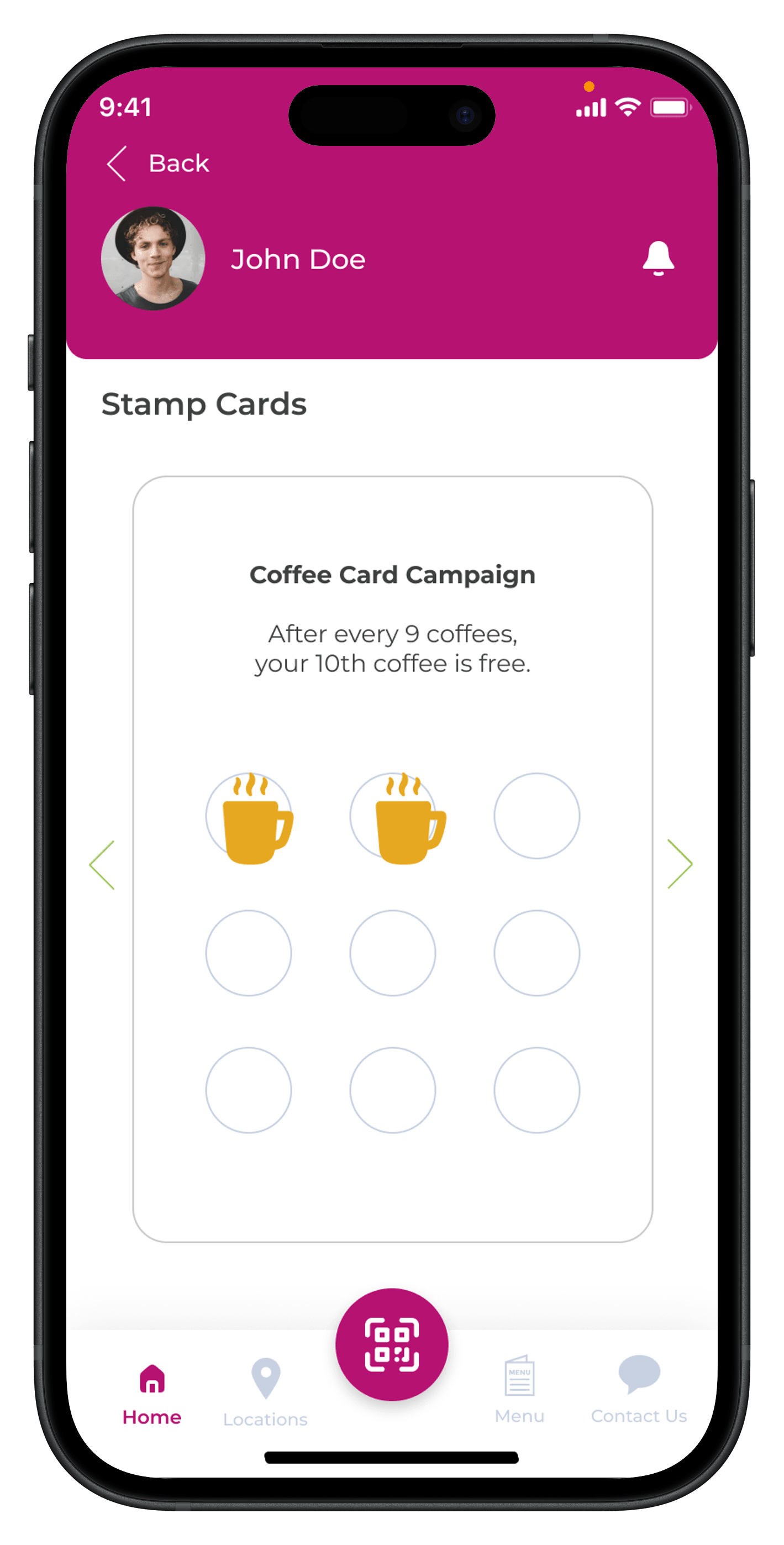
How does a digital loyalty card look to the customer?
With a digital system, customers do not need to interpret a separate paper card every time they participate. Their active stamp cards and collected stamps can be displayed directly in the mobile experience.
Letstamp also provides a transaction code and QR code that can be used when earning or redeeming. For manual Stamp Card transactions, the business starts the transaction using the customer's code or QR code and then selects the number of stamps for the relevant campaigns.
See how customers use LetstampIs a loyalty card the same as a loyalty program?
Not exactly. A loyalty card is a specific loyalty mechanism: it records progress toward a reward. A loyalty program is the broader system a business uses to recognize, reward and communicate with customers over time.
A complete program can therefore contain a loyalty card as well as other campaign models. For example, Letstamp can combine Digital Stamp Cards with Loyalty Points & Cashback , birthday campaigns, new customer campaigns, referrals and other loyalty tools.
This distinction matters strategically. A single stamp card can solve a specific repeat-purchase use case, while a broader loyalty program can address different stages of the customer relationship. For a wider explanation, see what a loyalty program does .
How businesses can use digital loyalty cards with Letstamp
Letstamp's Stamp Card module lets businesses create cards with a defined name, description, number of stamps and completion rules. Campaigns can be unlimited or given an end date, and businesses can control campaign visibility.
The Stamp Card can also include a completion time limit. If the card provides a reward, businesses can configure the reward title, description, reward type and expiration period. When a Reward Card is used, earning and redeemable branches can also be selected.
Businesses that need spending-based rewards instead of visit or purchase-count progress can use Reward Points campaigns separately. Those campaigns can provide a fixed Reward Points amount after a spending threshold or calculate Reward Points proportionally to the purchase amount.
Loyalty cards for different types of businesses
Loyalty cards work particularly well where customers naturally make repeat purchases or return for recurring services. The campaign should be adapted to that purchase cycle rather than applying the same stamp rule to every industry.
Coffee shops may use cards around recurring drink purchases, while restaurants can connect a card to qualifying visits or selected purchases. Beauty salons can design cards around repeat appointments, and retail businesses can decide whether a stamp-based model or a spending-based points model better reflects customer behavior.
For more specific examples, explore how loyalty mechanics can be applied in coffee shops and restaurants .
Moving from a simple card to a broader loyalty strategy
A loyalty card can be an effective starting point because the customer proposition is easy to understand. Once customers begin participating, businesses can expand the relationship with other loyalty tools instead of expecting one card to solve every retention objective.
For example, Customer Segmentation can help businesses review predefined behavioral groups such as routine customers, users who have lost their routine, customers with pending rewards and other loyalty-related segments. Those insights can then support more relevant customer communication and campaign planning.
If you are planning the wider structure rather than only an individual card, the guide on setting up customer loyalty with Letstamp explains the broader approach.