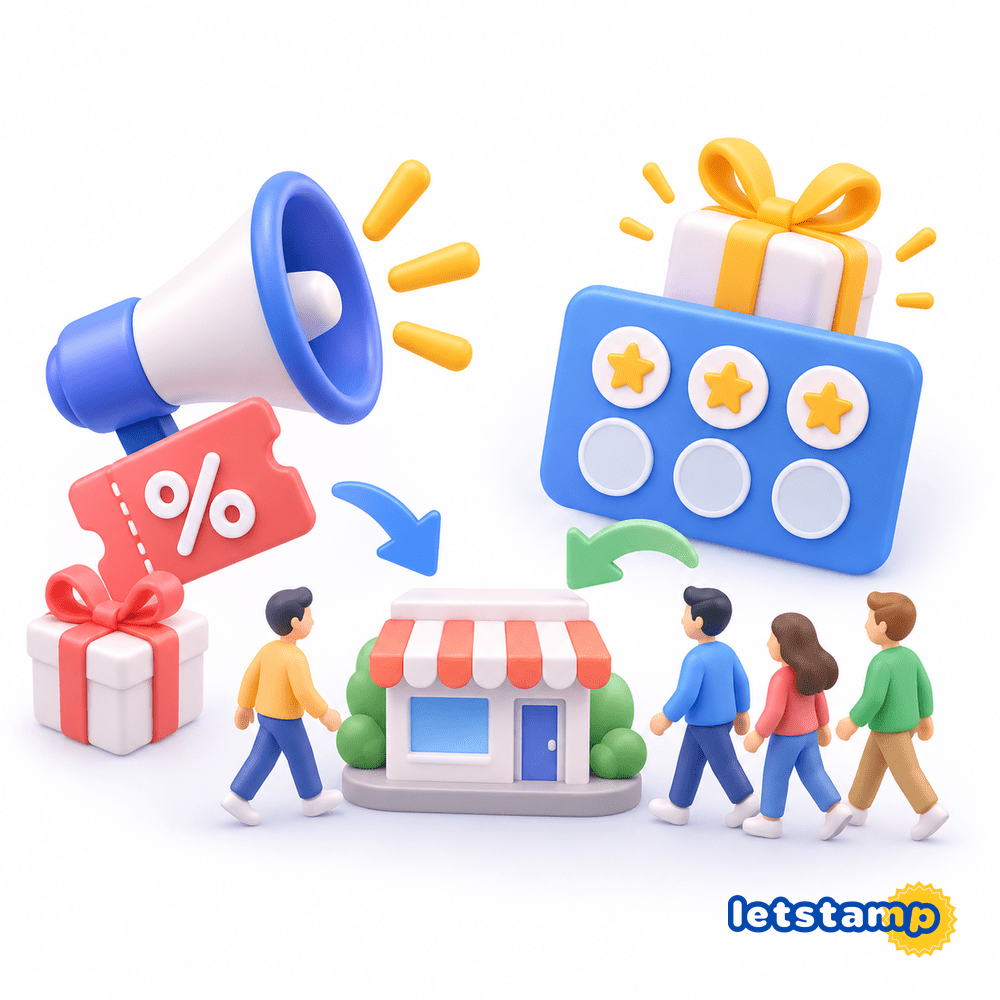
Businesses use both marketing campaigns and loyalty programs to influence customer behavior, but they solve different problems. A campaign usually gives customers a reason to act during a specific period. A loyalty program creates an ongoing structure that encourages customers to keep choosing the business over time.
That distinction matters when deciding where discounts, coupons, rewards and customer communication belong in your marketing strategy. If your goal is to understand the long-term side first, our guide to customer loyalty programs explains how these programs are structured around repeat customer relationships.
What is the main difference between a campaign and a loyalty program?
A campaign is typically a focused marketing activity designed around a particular objective, offer or period. A loyalty program is an ongoing system that rewards customer behavior across multiple visits or purchases.
Put simply: a campaign asks, “How do we motivate this action?” A loyalty program asks, “How do we give this customer a reason to keep coming back?”
What is a marketing campaign?
A marketing campaign is a coordinated activity created to achieve a specific objective. That objective might be attracting first-time customers, increasing visits during a quiet period, promoting a new product, distributing a limited offer or encouraging customers to complete a particular action.
Campaigns are therefore usually tactical. They have a clear proposition and are often connected to a defined period, usage condition or target audience. Examples include a grand-opening coupon, a seasonal promotion, a first-visit reward or a limited-time offer.
For example, Letstamp coupon campaigns can be configured with a coupon code, usage frequency and quantity, while campaign expiration settings can determine whether a campaign remains active until manually stopped or ends on a selected date.
What is a loyalty program?
A loyalty program is designed around an ongoing customer relationship rather than a single promotion. Customers receive a reason to continue interacting with the business through mechanisms such as stamp progress, reward points, cashback or other repeat-purchase rewards.
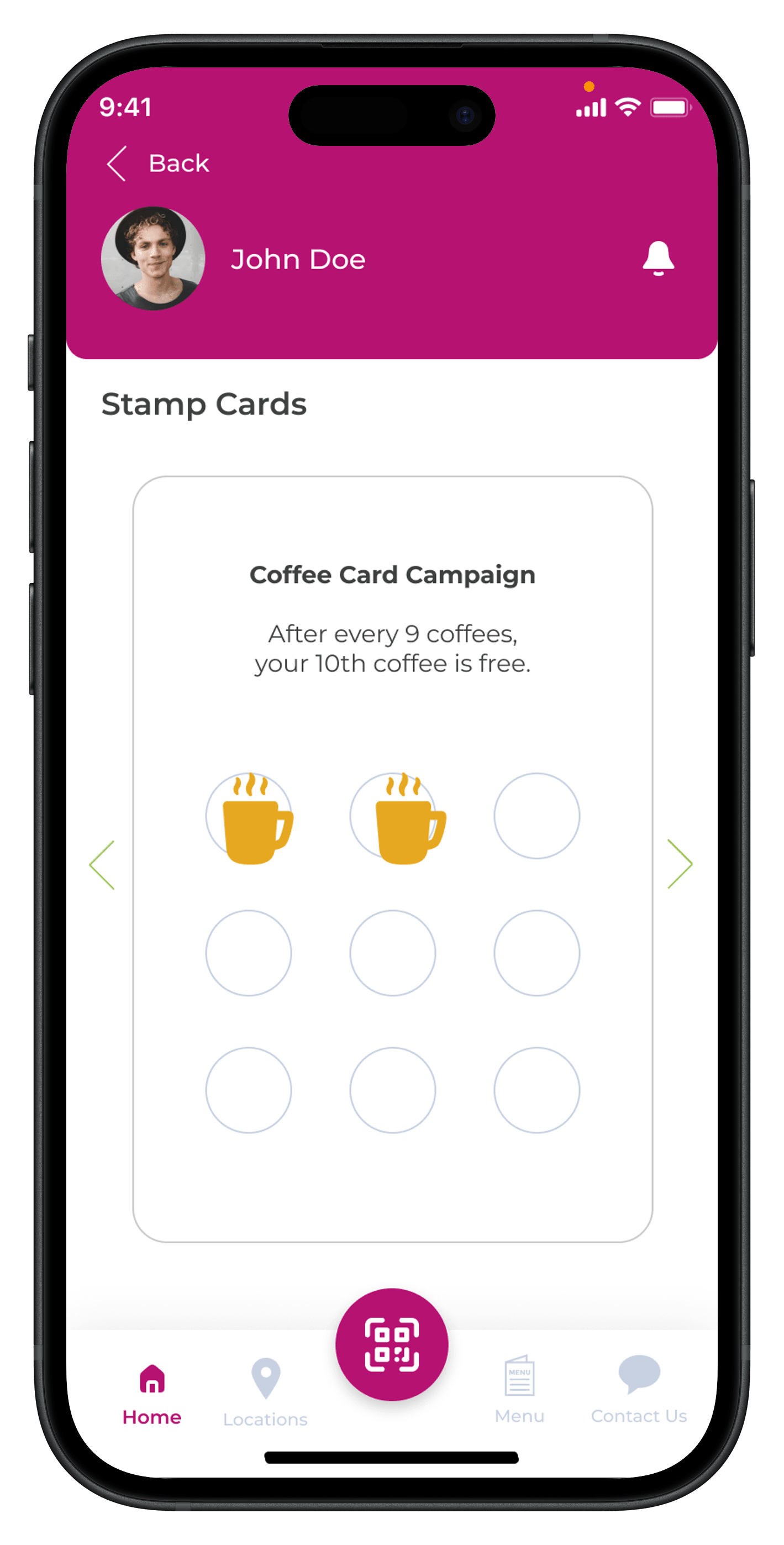
A simple example is a digital stamp card. Instead of offering everyone an immediate discount, the business can reward progress across multiple qualifying purchases. Customers can see their active cards and work toward a defined reward.
Spending-based programs can work differently. With loyalty points and cashback , businesses can define fixed or percentage-based Reward Points, minimum order requirements, earning limits and expiration settings. The reward mechanism becomes part of the customer's continuing relationship with the business.
Campaign vs loyalty program: side-by-side comparison
The easiest way to understand the difference is to compare the role each approach plays in the customer journey.
| Area | Marketing Campaign | Loyalty Program |
|---|---|---|
| Primary purpose | Encourage a specific customer action | Encourage repeat engagement and purchases |
| Time horizon | Often short-term or tied to a specific promotion | Usually ongoing and relationship-focused |
| Typical incentive | Coupon, special offer, welcome reward or promotion | Stamps, Reward Points, cashback or repeat-purchase rewards |
| Customer behavior | Act now or complete a defined action | Return, purchase again and continue participating |
| Relationship | Can work independently of previous purchases | Builds value through continued customer activity |
| Best strategic role | Acquisition, activation and targeted promotion | Retention and repeat customer engagement |
Why campaigns alone do not create a loyalty strategy
Promotions can be highly useful, but repeated promotions are not automatically a loyalty program. If customers only receive isolated offers, there may be no continuing structure connecting one purchase with the next.
Consider a business running a 20% discount for one weekend. The offer can give customers a reason to purchase during that weekend, but the promotion itself does not define what happens after the transaction. Once the offer ends, the incentive ends with it.
A loyalty mechanism adds continuity. A customer might collect stamps toward a reward, accumulate Reward Points from purchases or receive benefits connected to future visits. This is why the benefits of loyalty programs are better understood in terms of an ongoing customer relationship rather than a single promotional event.
Campaigns and loyalty programs work better as different layers
Businesses do not need to choose one approach and abandon the other. Campaigns and loyalty programs can serve different stages of the same customer journey.
Campaigns can activate customers
A welcome offer, coupon or targeted promotion can give someone an immediate reason to make a first or additional purchase.
Loyalty can encourage the next visit
Stamps, Reward Points and ongoing rewards give customers a continuing reason to participate after the initial campaign.
Example: turning a customer campaign into a retention journey
Imagine a coffee shop wants to attract more first-time customers. It could start with a new customer campaign that provides an introductory reward after the customer's first transaction.
That solves the first challenge: encouraging initial participation. But the business can then connect the customer to a digital stamp card designed around repeat coffee purchases. The first campaign supports acquisition, while the stamp card supports continued engagement.
The result is a more complete customer journey: give customers a compelling reason to start, then provide a clear reason to return.
Give customers something to continue after the campaign
A campaign becomes more strategically useful when the customer journey does not stop after the reward is claimed. An ongoing loyalty mechanic can provide visible progress toward the next benefit.
With Letstamp stamp cards, businesses can define the number of stamps required, card completion limits, reward settings and campaign expiration. Customers can then view their active stamp cards from the app.
When should you use a campaign?
A campaign makes sense when the business has a specific behavior it wants to encourage. The objective should be clear enough that the promotion can be designed around it.
- Attract customers for a launch or special period
- Give first-time customers a reason to complete their first purchase
- Promote a particular product or offer
- Distribute a coupon with defined usage conditions
- Re-engage a selected customer group with a targeted incentive
When should you use a loyalty program?
A loyalty program is appropriate when repeat business matters and the company wants to build a structured relationship across multiple transactions rather than treating every visit independently.
- Customers naturally make repeat purchases
- You want to reward purchase frequency or spending
- Customers should be able to progress toward future rewards
- You want to distinguish routine, inactive or reward-using customers
- Retention is an ongoing objective rather than a one-time promotion
How Letstamp connects campaigns and customer loyalty
Letstamp supports different campaign mechanics so businesses can use short-term incentives and ongoing loyalty models within the same customer strategy.
For repeat purchases, businesses can use digital stamp cards or Reward Points. For more targeted promotional activity, Letstamp also supports coupon campaigns, new customer campaigns, birthday campaigns, referral campaigns and gamification.
The relationship can continue beyond reward mechanics. Customer segmentation provides behavioral customer groups, including routine customers, customers who have lost their routine, passive users and different reward-usage groups. Businesses can then select customers and send messages using push notifications or SMS.
How to decide which strategy you need
Start with the customer behavior you want to influence rather than starting with the discount or reward. This keeps the incentive connected to a business objective.
If the objective is immediate activation, a focused campaign may be enough. If the objective depends on customers returning over time, build an ongoing loyalty mechanism. When both acquisition and retention matter, use campaigns to create moments of action and a loyalty program to connect those moments into a longer customer journey.
Do not make every loyalty interaction a discount
A loyalty strategy can include stamps, Reward Points, rewards, birthday benefits, referrals and targeted communication. Use temporary discounts when they support a clear campaign objective rather than making discounting the only reason customers return.
The key takeaway
Campaigns and loyalty programs are not competing concepts. Campaigns are useful for creating specific moments of action, while loyalty programs create continuity between those moments.
A business can use a campaign to attract, activate or re-engage a customer and then use its loyalty program to encourage continued participation. That combination creates a clearer path from a promotional interaction to an ongoing customer relationship.