

A successful law office depends on more than legal expertise. Client service, teamwork, knowledge sharing, mentoring, business development and consistent execution all contribute to the firm's long-term performance.
A well-designed lawyer reward system can recognize these contributions and give attorneys and other legal professionals clearer reasons to engage with the goals of the firm. Rather than relying only on occasional bonuses, a structured program connects specific achievements with meaningful recognition or rewards.
If you are new to this approach, start with the fundamentals in our guide to employee reward programs .
What is a lawyer reward system?
A lawyer reward system is a structured approach for recognizing attorneys and legal staff when they achieve defined goals or demonstrate valuable behaviors. Rewards can be linked to individual performance, team results, client service, professional development or contributions to the firm.
The most effective programs use criteria employees can understand and influence instead of rewarding only a narrow set of outcomes.
Why use a reward system in a law office?
Legal work can involve long projects, demanding deadlines and contributions that are not always visible in a traditional compensation structure. An attorney may mentor a junior colleague, improve an internal process, support an important client relationship or contribute valuable knowledge without those actions immediately appearing in a revenue figure.
A broader reward system gives the firm a way to recognize the behaviors it wants to encourage. It can also make expectations clearer: employees know what the organization values, how achievements are evaluated and what recognition may follow.
What should a law office reward?
There is no single performance metric that works for every legal practice. The right criteria depend on the firm's size, practice areas, culture and strategic priorities.
A balanced program can combine several types of contribution instead of rewarding only one metric.
Business Development
Recognize qualified new client introductions, successful relationship development or contributions to the firm's business development efforts.
Team Contribution
Reward collaboration, knowledge sharing, cross-team support and contributions that help colleagues perform more effectively.
Client Service
Recognize reliable communication, strong client care and other service behaviors that support long-term professional relationships.
Professional Development
Encourage mentoring, internal training, knowledge development and other activities that strengthen the capabilities of the firm.
How to create a lawyer reward system
The mechanics do not need to be complicated. A practical program starts with a small number of clearly defined goals and expands only when the organization understands what works.
1. Define the objective
Decide what you want to encourage: collaboration, professional development, client service, business development or another measurable contribution.
2. Set clear criteria
Explain exactly which actions or achievements qualify so employees understand how the system works before participating.
3. Choose meaningful rewards
Match rewards to your team and company culture. Recognition can include financial and non-financial incentives.
4. Review the results
Monitor participation, completed goals, reward usage and employee feedback, then refine criteria that are unclear or ineffective.
Use individual and team rewards together
Individual rewards are useful when an achievement can clearly be attributed to one person. However, legal work is frequently collaborative. Cases, transactions and client relationships may involve partners, associates, paralegals and administrative teams working together.
For that reason, an effective law office reward program can include both individual and shared goals.
| Reward Model | Example | Best Used For |
|---|---|---|
| Individual | Completing a defined professional development goal | Personal development and measurable individual contributions |
| Team | Completing a major internal project successfully | Collaboration and shared responsibility |
| Firm-wide | Reaching a shared organizational milestone | Creating alignment around broader priorities |
Choose rewards that fit your legal team
Rewards do not always need to be cash bonuses. Different employees may value different forms of recognition, and a broader reward catalog can make the program more relevant to the team.
- Performance bonuses or financial rewards
- Additional paid time off
- Professional training or development opportunities
- Gift rewards or special benefits
- Points that can be exchanged for defined rewards
- Public recognition for meaningful contributions
- Team experiences for shared achievements
Keep the rules transparent
Employees should be able to understand how an achievement is verified, who approves it and when a reward is issued. If two people make similar contributions but receive different treatment without a clear reason, confidence in the program can quickly decline.
Keep campaign rules concise and communicate them through the channels your team already uses. For larger firms, managers should apply the same criteria consistently across teams and offices.
Reward the behavior behind the result
Results matter, but the way those results are achieved matters too. A strong reward program recognizes behaviors such as collaboration, responsibility, knowledge sharing and excellent client service alongside measurable outcomes.
Make rewards visible and easy to understand
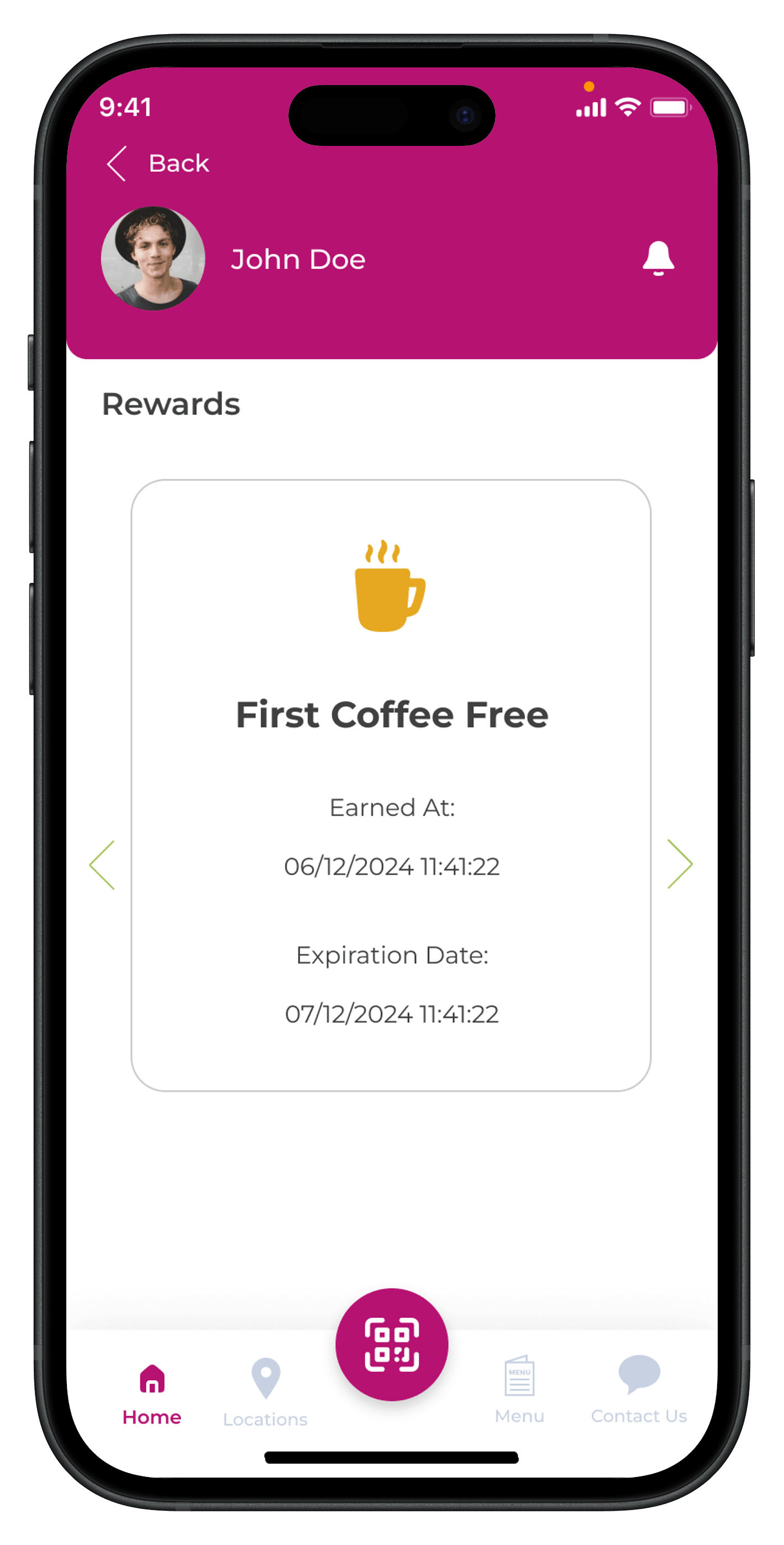
A digital reward experience can make earned benefits easier for users to track. In Letstamp, active rewards can be displayed in the app so users can see the rewards available to them.
Give participants a clear view of earned rewards
When a reward program is managed digitally, making earned rewards visible can simplify the participant experience. Users should be able to understand what they have earned and which rewards are currently available.
Letstamp supports digital rewards and Reward Points, giving businesses different ways to structure reward-based experiences.
How should you measure the program?
Do not evaluate the program only by counting how many rewards were distributed. Return to the objective you defined before launch and measure whether the program is supporting that objective.
Depending on your model, useful indicators can include participation, goal completion, reward redemption and employee feedback. If a criterion is rarely achieved or employees do not understand it, the rule may need to be simplified or replaced.
Regular reviews also help prevent a reward system from becoming outdated as the priorities and structure of the law office change.
Lawyer reward system FAQs
Build a Digital Reward Experience with Letstamp
Explore digital rewards, Reward Points and other tools for creating structured reward experiences with Letstamp.