
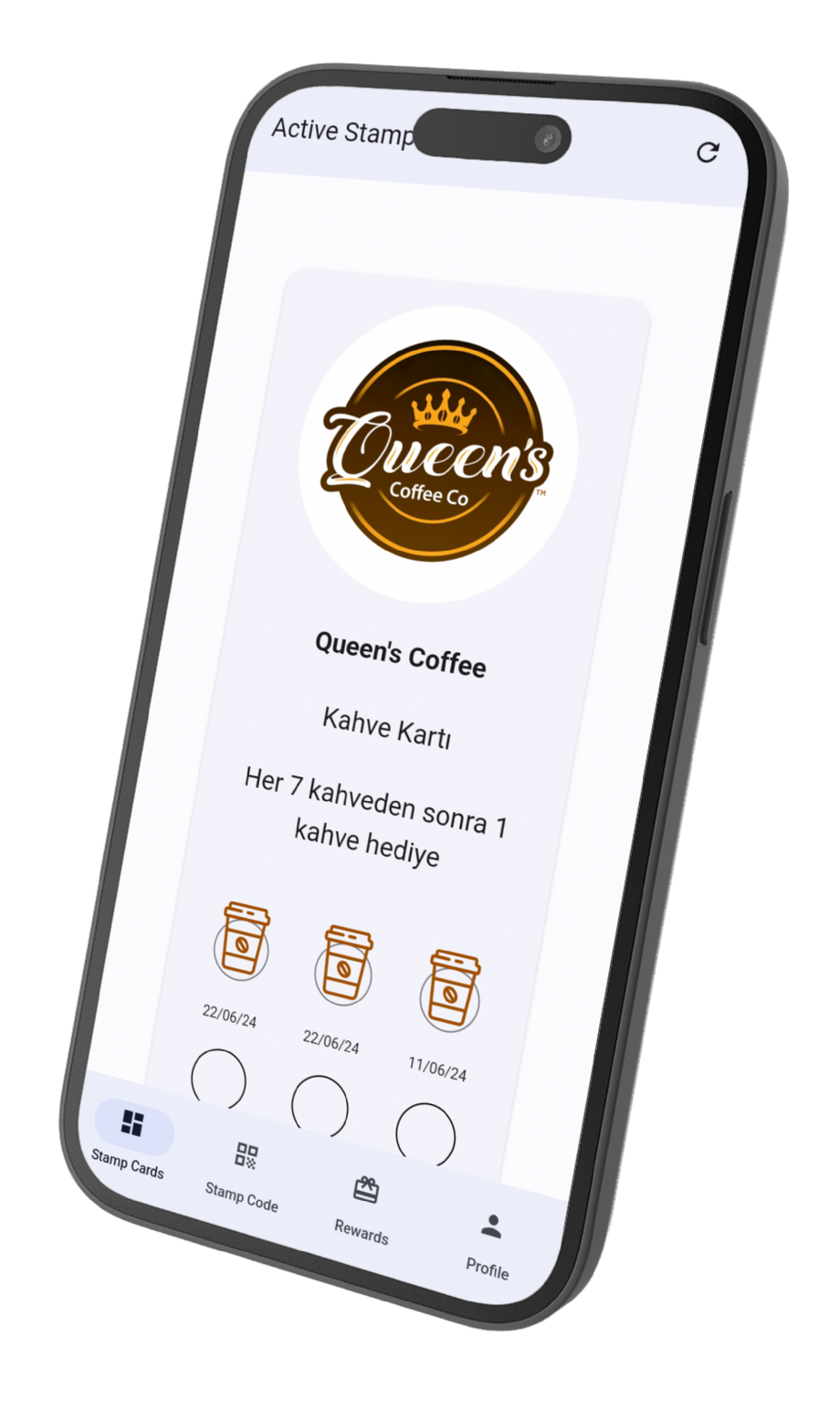
A mobile loyalty card is a digital alternative to a traditional paper or plastic loyalty card. Instead of carrying another card in a wallet, customers can access their stamps, rewards and loyalty activity through their phone.
The basic idea is familiar: customers make qualifying purchases, progress toward a reward and redeem what they earn. The difference is that the experience is digital. Businesses can therefore move beyond the limitations of a printed card and connect loyalty with other customer engagement tools.
If you are starting with the fundamentals, see what a loyalty card is and how it fits into a broader customer loyalty strategy.
What is a mobile loyalty card?
A mobile loyalty card allows customers to collect and track loyalty benefits digitally instead of carrying a physical card. Depending on the loyalty model, customers may collect stamps, earn Reward Points, receive rewards and access their loyalty activity from a mobile application.
How does a mobile loyalty card work?
The customer joins the business's loyalty experience on their phone. When a qualifying transaction takes place, the business records the customer's loyalty activity and the customer's progress is updated digitally.
With Letstamp, stamp transactions can be started using the transaction code displayed on the customer's phone or by scanning the customer's QR code. The business can then add the appropriate stamps for active campaigns. When the customer earns a reward, that reward can later be selected and redeemed.
1. Customer joins
The customer accesses the digital loyalty experience from their phone instead of receiving a physical card.
2. Transaction is identified
The customer's transaction code or QR code can be used to begin a loyalty transaction.
3. Progress is recorded
Stamps or other supported loyalty earnings are added according to the active campaign.
4. Reward is redeemed
Eligible rewards remain visible digitally and can be redeemed when the customer uses them.
Mobile loyalty card vs. physical loyalty card
Physical cards can still support a simple loyalty mechanic, but they have practical limitations. They need to be printed and distributed, customers need to remember to carry them, and the card itself cannot provide an ongoing digital communication channel.
| Area | Physical loyalty card | Mobile loyalty card |
|---|---|---|
| Access | Customer needs the card | Accessible from the customer's phone |
| Printing | Cards must be produced and replaced | No physical loyalty card printing required |
| Loyalty progress | Usually shown directly on the card | Stored and displayed digitally |
| Customer communication | Not built into the card itself | Can work alongside app push notifications |
| Customer insight | Limited | Can connect with customer profiles and segmentation |
Why businesses move loyalty cards to mobile
The main advantage of going mobile is not simply replacing cardboard with a screen. A digital loyalty program can make the loyalty relationship easier to manage for both the business and the customer.
Easier access
Customers can keep their loyalty experience on the device they already carry throughout the day.
Less printing
Businesses do not need to continually print and distribute replacement loyalty cards.
Digital communication
Loyalty can work alongside app notifications and targeted customer communication.
Keep loyalty progress visible on the customer's phone
A customer should not have to remember how many visits remain before the next reward. In a digital experience, active stamp cards can be displayed directly inside the application so the customer can check their progress when needed.
Letstamp supports digital stamp card campaigns where businesses can configure the required number of stamps, campaign availability and the reward customers receive after completing the card.
A mobile loyalty card can do more than collect stamps
A physical stamp card normally focuses on one mechanic: collect enough stamps and receive a reward. A mobile loyalty setup can connect that mechanic with other parts of the customer relationship.
For example, Letstamp also supports Loyalty Points and Cashback . Customers can earn Reward Points based on configured campaign rules, while the business can track customer rewards and Reward Points from customer profiles.
This makes it possible to choose a loyalty model according to the behavior you want to encourage rather than forcing every business into the same stamp-card structure.
Customers can keep earned rewards with their loyalty activity
Once a customer has earned a reward, keeping it visible inside the digital experience reduces dependence on a separate printed voucher or paper coupon.
Letstamp allows businesses to review customer rewards and Reward Points, while customers can access their active loyalty information from the mobile experience.
Explore the loyalty application
Stay connected after the customer leaves
One of the major differences between a physical card and a mobile loyalty experience is what happens between purchases. A printed card sits in a wallet. A mobile application can also serve as a customer communication channel.
Letstamp allows businesses to send app push notifications to selected customers or, when no customer selection is made, to the broader customer base. Messages can also be scheduled for a future time.
This can be useful when a business wants to communicate a new campaign, remind customers about an opportunity or bring attention back to the loyalty experience.
Use customer behavior to make loyalty more relevant
Digital loyalty also creates an opportunity to understand customer behavior more systematically. Letstamp's customer segmentation includes predefined behavioral groups that businesses can customize according to their customer routines.
These include groups such as one-time customers, routine customers, customers who have lost their routine and passive users. Reward usage can also be viewed through segments such as customers with pending rewards or routine reward users.
Instead of treating every loyalty member identically, this gives the business a clearer way to identify different customer behaviors before deciding how to communicate with them.
Make the mobile experience part of your brand
A mobile loyalty program is also an interface customers interact with, so presentation matters. Letstamp's Mobile App Management allows businesses to manage predefined areas of their mobile application, including banners and buttons.
Businesses can also change button text and icons, assign links and create additional in-app pages that can be linked from other parts of the application.
What should a good mobile loyalty card include?
Moving a loyalty card to mobile works best when the digital experience remains straightforward. Customers should understand what they can earn, how progress is recorded and how a reward can eventually be used.
- Make the earning rules easy to understand.
- Clearly define how many stamps or points are required.
- Give rewards clear titles and descriptions.
- Set reward expiration rules intentionally.
- Keep the customer's loyalty progress easy to access.
- Use customer communication only when it adds genuine value.
Is a mobile loyalty card suitable for small businesses?
Mobile loyalty is not limited to large brands. The underlying need is the same for businesses of different sizes: recognize repeat customers, give them a reason to return and make rewards simple to manage.
Restaurants, coffee shops, bakeries, beauty salons, clothing stores, pet shops and many other repeat-purchase businesses can use digital loyalty when the reward structure matches the way their customers naturally return.
Businesses that want to go beyond a shared loyalty environment can also explore how to create their own loyalty app with Letstamp.
Replace Physical Loyalty Cards with a Mobile Experience
Create digital loyalty campaigns, manage rewards and give customers a simpler way to access their loyalty activity from their phones.