

A well-designed customer loyalty program gives customers an additional reason to return to a business instead of treating every purchase as an isolated transaction. By connecting repeat visits, spending or other customer actions with meaningful rewards, businesses can create a more structured relationship with their customers.
Loyalty programs can take several forms, including digital stamp cards , loyalty points and cashback , birthday rewards and referral campaigns. The right model depends on how customers naturally interact with the business.
What are the main benefits of a loyalty program?
Loyalty programs can encourage repeat purchases, give customers a reason to choose the same business again, support different reward strategies, improve customer engagement and provide businesses with more useful information about customer behavior.
Their greatest value comes from turning customer loyalty into an ongoing process rather than relying only on occasional promotions.
1. Loyalty programs encourage repeat purchases
One of the clearest benefits of a loyalty program is that it creates a reason for customers to return. Instead of ending the relationship when a transaction is completed, the customer can continue making progress toward a future reward.
A digital stamp card is a straightforward example. A business can define the number of stamps required to complete a card and determine what reward the customer receives after completion.
2. Customers have a stronger reason to choose the business again
Customers often have several businesses available for similar products or services. A loyalty program can add another consideration to that decision by making previous purchases contribute toward a future benefit.
The reward does not need to be complicated. What matters is that the customer can understand what they are working toward and how they can earn it. A clear loyalty structure can therefore help the business remain relevant when the customer is deciding where to make the next purchase.
3. Businesses can reward different types of customer behavior
Loyalty does not have to be based only on the number of visits. Different campaign models allow businesses to encourage different customer behaviors depending on their objectives.
Repeat visits
Digital stamp cards can reward customers after a defined number of qualifying transactions.
Customer spending
Reward Points can be configured as a fixed amount or as a percentage based on customer spending.
Special occasions
Birthday campaigns can automatically provide eligible customers with a birthday reward once per year.
Customer referrals
Referral campaigns can reward the inviter or invited customer according to the configured campaign rules.
4. Loyalty programs can support higher customer value over time
When customers know that their purchases contribute toward future rewards, the relationship with the business can extend across multiple transactions.
For businesses where transaction values vary, a spending-based model may be more suitable than a visit-based model. Letstamp Reward Points can be configured as a fixed reward after a specified spending amount or as a percentage of spending, with optional minimum purchase, maximum earning and expiration settings.
5. Loyalty programs help build stronger customer relationships
Loyalty is not created by rewards alone. A strong program also gives a business opportunities to recognize customers at relevant moments and create interactions beyond the basic purchase.
For example, birthday campaigns can provide eligible customers with a birthday reward, while referral campaigns can involve existing customers in introducing new people to the business.
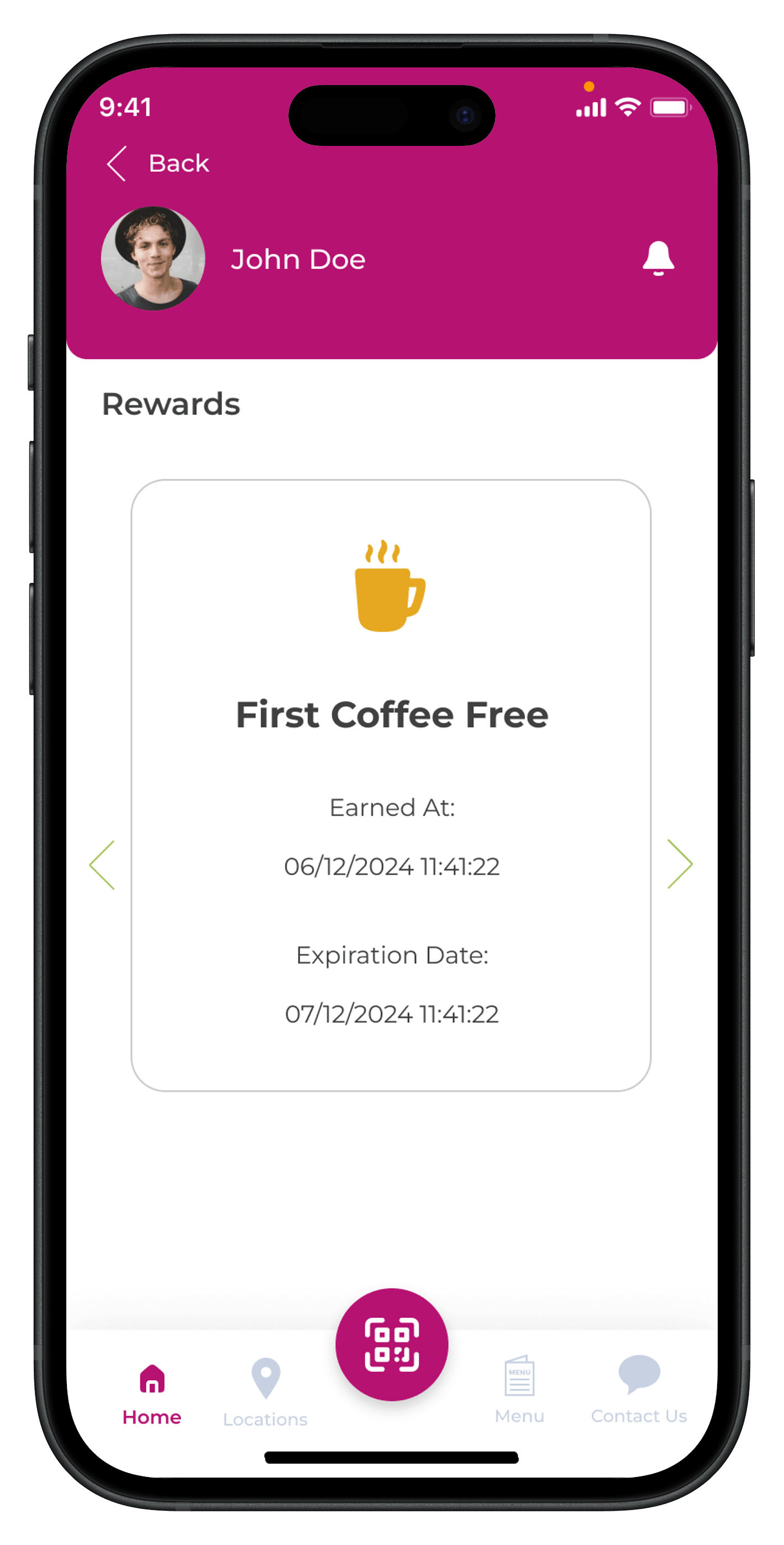
Rewards are easier to follow when progress is visible
A loyalty program is easier for customers to understand when they can see the rewards they have earned and the progress they have made.
In Letstamp, customers can view active stamp cards and rewards in the mobile experience. This gives them a clear place to follow their loyalty activity instead of depending on a physical card or remembering progress themselves.
6. Businesses can understand customer behavior more clearly
A digital loyalty program also creates useful information about the way customers interact with a business. Rather than treating every customer as part of the same group, businesses can examine patterns such as repeat activity, inactivity and reward usage.
Letstamp customer segmentation includes predefined customer acquisition and reward usage segments. The values used for these segments can be customized according to the business's customer routines.
This can help businesses distinguish between customers who have not yet completed a transaction, one-time customers, routine customers, customers who have lost their routine and customers with different reward usage patterns.
7. Customer communication can become more relevant
Loyalty programs are more useful when businesses can reconnect with customers after the initial transaction. Instead of sending the same message to everyone, customer data and segmentation can support more relevant communication.
With Letstamp, businesses can select customers and send push notifications or SMS messages . Messages can also be scheduled for a future date.
The value of this approach is not simply sending more messages. It is being able to connect communication with customer activity, rewards and segments in a more structured way.
8. Loyalty becomes a long-term strategy instead of a one-off campaign
Discounts and short promotions can create temporary activity, but a loyalty program is designed around an ongoing customer relationship. Customers can continue earning, redeeming and interacting with the business over time.
This distinction is important. As explained in our guide to the difference between campaigns and loyalty programs , individual campaigns can support specific objectives, while the loyalty program provides the broader structure that connects those interactions.
Which loyalty model supports which benefit?
Different loyalty mechanics solve different problems. Businesses can select the model that best matches the way their customers already purchase and interact.
| Loyalty model | Useful for | How it works |
|---|---|---|
| Digital Stamp Card | Repeat visits and repeat purchases | Customers collect a defined number of stamps and can receive a configured reward after completing the card. |
| Reward Points | Spending-based loyalty | Customers can earn a fixed amount or points proportional to their spending according to campaign settings. |
| Birthday Campaign | Recognition and customer engagement | Eligible customers can automatically receive a birthday reward and benefit once per year. |
| Referral Campaign | Customer referrals | A reward can be configured for the inviter or invited person, either after the invitation or after the invited customer's first transaction. |
How to get more value from a loyalty program
The existence of a loyalty program alone does not guarantee that it will be useful. The campaign structure should reflect actual customer behavior and the business objective.
A coffee shop with frequent purchases may prefer a simple stamp card, while a retailer with larger differences in order value may find a spending-based Reward Points model more appropriate. Birthday, referral and communication campaigns can then support the core loyalty structure.
Businesses planning their first program can also review how to set up customer loyalty with Letstamp for a more practical implementation overview.
Which businesses can benefit from loyalty programs?
Loyalty programs are especially relevant for businesses where customers have a natural reason to purchase or visit repeatedly. The specific loyalty mechanic should match that purchase cycle rather than applying the same model to every industry.
For example, coffee shops can focus on frequent repeat purchases, while clothing stores may place greater emphasis on spending-based rewards and customer communication.
The best loyalty program supports the next customer interaction
The main purpose of a loyalty program is not simply to distribute discounts. It is to create a clear reason for customers to continue interacting with the business.
When the reward model, customer data and communication strategy work together, loyalty becomes part of the overall customer experience.